
 EN
EN  DE
DE 
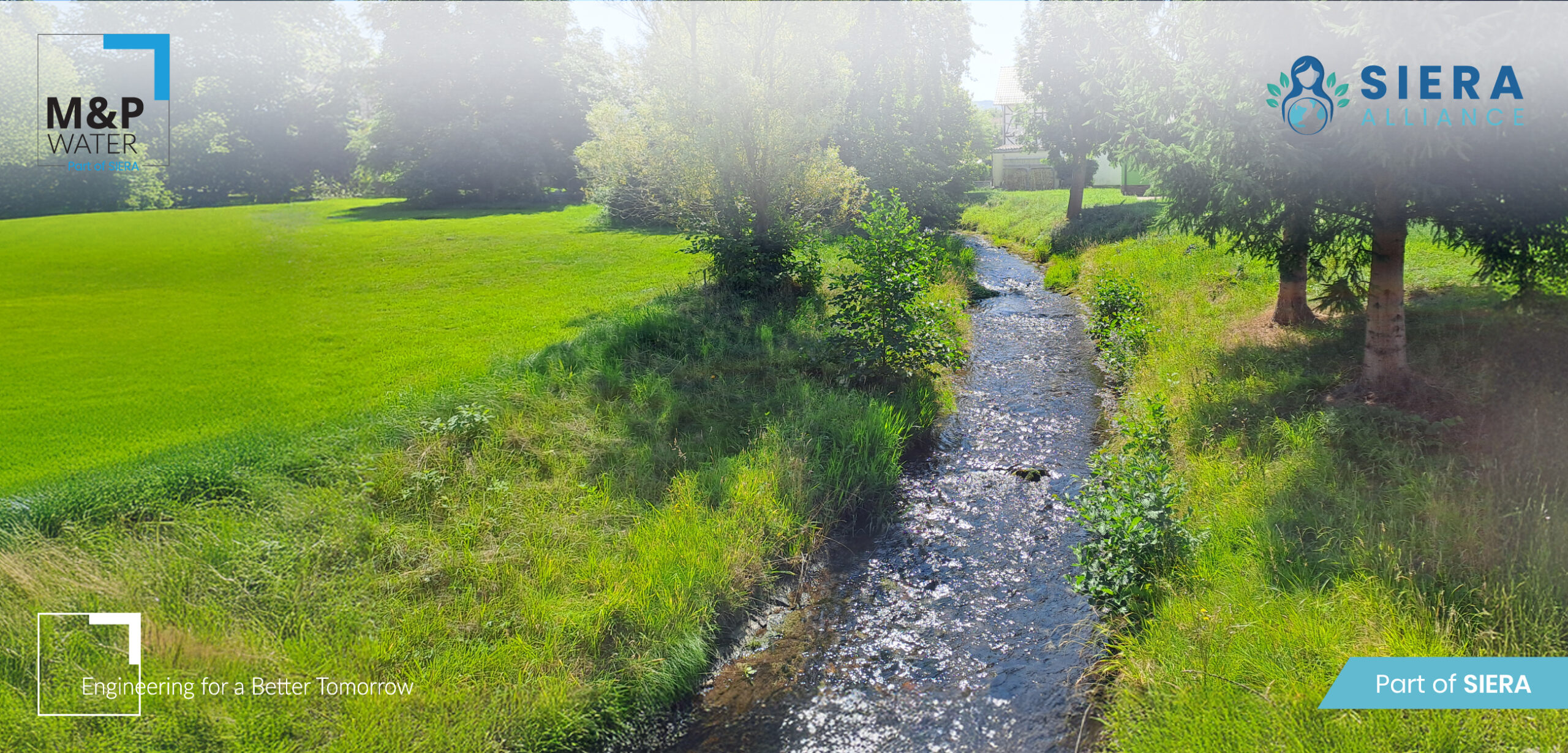
Renaturalisation of water bodies in Thuringia: How near-natural watercourse development strengthens ecosystems and communities
Throughout Thuringia, watercourses such as the Linderbach, the Gramme and the Erbstrom are at the centre of ambitious ecological development initiatives. Although these watercourses are categorised as „2nd order watercourses“, their ecological significance is far greater - they shape regional biodiversity, influence flooding and serve as important ecological corridors in a landscape characterised by agriculture and settlement structures. As part of the Thuringian State Programme for Water Protection 2022-2027 supports the M&P Water GmbH - Member of the SIERA Alliance the Gera/Gramme and Hörsel/Nesse water maintenance associations in the implementation of key measures in accordance with the EC Water Framework Directive (EC-WFD).
These measures mark an important change: away from historically obstructed and heavily regulated watercourses towards resilient, dynamic river landscapes that function more naturally and offer long-term ecological and social benefits.
From technical channels to living streams
Many river sections in the region have been heavily modified by man over the past century. Straightening, depth regulation and solid bank stabilisation were long regarded as efficient solutions for flood protection and gaining land for agriculture. However, these interventions impaired the natural flow dynamics, reduced habitat diversity and weakened the ecological performance required to achieve the objectives of the EC WFD.
Current surveys show the typical effects of these changes:
- Straightened sections, reduce natural variability such as meanders, scours and noise
- Deepened channels, that prevent the connection to the floodplain and disrupt groundwater interaction
- Very sunny stretches of water, that increase water temperature and reduce habitat quality
- Fixed technical structures such as bank and riverbed stabilisation, which destroy spawning and retreat areas
For watercourses such as the Erbstrom or the Gramme, these conditions represent both ecological and hydromorphological deficits. Their development requires precise and holistic planning - a process to which M&P Water GmbH and the Members of the SIERA Alliance have specialised for many years.
Ecological development measures: Creating space for natural processes
The core of Thuringia's watercourse development measures is to allow natural flow processes to take place again. Instead of forcing watercourses into rigid geometric shapes, the aim is to give them the space and structural diversity they need to develop dynamically on their own.
Key measures include
1. dismantling of technical bank reinforcements
The removal of fixed obstructions creates space for natural lateral erosion, sediment redistribution and vegetation development - the basis for diverse microhabitats.
2. partial widening of the water profiles
The widening of the profile promotes a differentiated flow distribution and creates shallow areas with low currents that serve as retreats and spawning grounds.
3. preservation and development of woody plants typical of water bodies
Riparian trees stabilise the banks, provide shade, reduce overheating in summer and carry organic material into the water.
4. initial planting of alluvial forest structures
Targeted planting within the watercourse development corridors strengthens ecological resilience in the long term. They reduce nutrient inputs, improve floodplain dynamics and increase biodiversity.
5. promotion of self-dynamic water processes
Water bodies function best when they can adapt to changing conditions on their own. This self-dynamism is crucial to achieving the „good ecological status“ of the EC WFD.
Together, these measures are transforming previously monotonous bodies of water into complex, species-rich ecosystems. At the same time, flood protection is improved as natural floodplains retain more water and attenuate runoff peaks.
Why M&P Water's expertise is crucial for sustainable water development
The measures implemented in Thuringia precisely reflect the interdisciplinary, nature-based approach that M&P Water - Member of the SIERA Alliance is what sets us apart. With many years of experience in hydrology, hydraulic engineering, renaturation planning and integrated water management, M&P Water combines all the key expertise required for sustainable water development - from analysis to implementation.
Project partners benefit from the expertise of M&P Water through:
→ Comprehensive hydromorphological assessments
Detailed analyses of discharge conditions, sediment dynamics, riverbed structures and ecological potential form the basis for customised solutions.
→ State-of-the-art planning and modelling processes
Hydraulic and numerical models make it possible to simulate the behaviour of water bodies, assess risks and check the ecological effectiveness of planned measures.
→ Expertise in nature-based engineering solutions
The use of natural materials, bio-engineering construction methods and geomorphological principles are at the centre of attention in order to strengthen ecological functions with minimal intervention.
→ Interdisciplinary coordination with relevant stakeholders
Authorities, municipalities, water maintenance associations, farms and local communities benefit from clear communication and adaptable project management.
→ Strong support during implementation
From construction supervision to performance monitoring, M&P Water ensures that every measure achieves the desired ecological added value.
This integrated approach is essential when developing complex water systems at the interface between ecology, engineering, planning and regulatory requirements.
A driver for biodiversity and climate adaptation
The developments on the Linderbach, Gramme and Erbstrom rivers go far beyond the restoration of habitats. They also strengthen regional climate adaptation:
- Reduced heat load through shaded waters
- Improved flood protection through natural retention areas
- Increase in biodiversity in aquatic and riparian habitats
- Better water balance through improved groundwater interactions
- Greater resilience against extreme weather events
Agriculture, municipalities and infrastructure also benefit from the stabilised hydrological conditions.
The water development projects in Thuringia show what is possible when ecological principles, technical expertise and long-term perspectives come together. By giving rivers space for natural development again, resilient landscapes, revitalised ecosystems and higher quality water bodies are created.
Ready to develop your waterways? Let's design robust river landscapes.
Whether for municipal water management, ecological planning or sustainable solutions for regulated waters:
MuP Wasser - Member of the SIERA Alliance
is ready with comprehensive expertise in hydrology, renaturation and near-natural hydraulic engineering.
👉 Discover our service portfolio and get in touch.
Together, we are creating water systems that are fit for the future.